Cloughton 2 / Burniston; Environmental Permit Consultation Response
This page presents my formal response to the Environment Agency's draft decision consultation on permit EPR/YP3623LC/A001, covering the proposed Cloughton 2 wellsite at Burniston, North Yorkshire. The site is unconnected to Preston New Road, but the monitoring-architecture framework developed there - testing whether a permit's proposed detection system can actually catch, attribute and reconstruct the events it claims to control for - applies directly here.
The documents below distinguish binding UK law from EU-derived provisions, current EU comparators used only for context, and international technical benchmarks. Findings are graded by severity, and each comes with a proposed permit condition that would close it. Images from the Preston New Road archive are included further down this page as methodological illustration only - not as evidence about Burniston, which has not yet been constructed.
I am asking the Environment Agency to ensure that the permit establishes a complete environmental baseline before disturbance, monitors every credible pathway by which material could move from or through the site, verifies that controls actually perform as assumed, follows waste and contaminants to their final fate, and requires unexpected signals to trigger investigation, operational hold points and revision of the working model - with the resulting evidence preserved and publicly auditable.
The 20 requested amendments are not 20 separate objections to the development. Together they propose an environmental assurance system: establish the condition of the site before work begins; monitor air, water, ground, seismicity and radiological conditions at sufficient resolution; account for all routes by which gas, liquids and solids can move on-site, underground or off-site; verify containment, flaring, waste treatment and other controls against actual operating conditions; and ensure that unusual observations trigger a documented investigation rather than being lost between monitoring programmes or regulatory responsibilities. The final requirement is that the evidence remains traceable, reusable and capable of showing whether the site was returned to an acceptable condition.
Documents
Formal Objection to Draft Environmental Permit
Our primary response to the Environment Agency, requesting twenty specific permit amendments before the permit is granted.
Environmental Monitoring and Assurance at the Cloughton 2 Wellsite
The full technical assessment underpinning the objection: a standard-by-standard comparison against UK, EU and international benchmarks, a ranked gap register, and a review of comparable monitoring failures at other sites.
Standards-Based Consultation Addendum
A condensed version of the findings and requested permit conditions, for readers who want the substance without the full report.
Methodology illustration: air-parcel trajectories
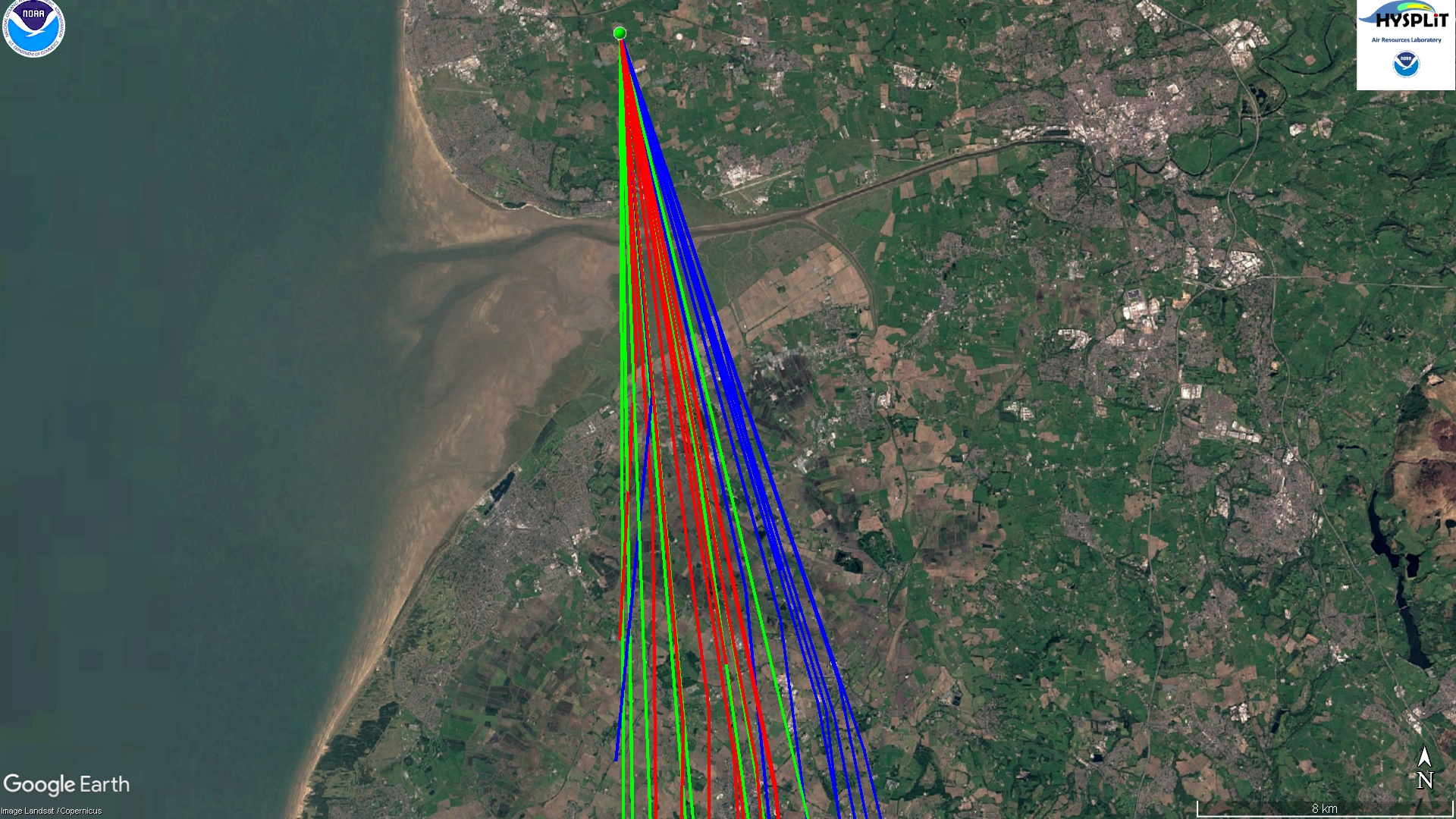
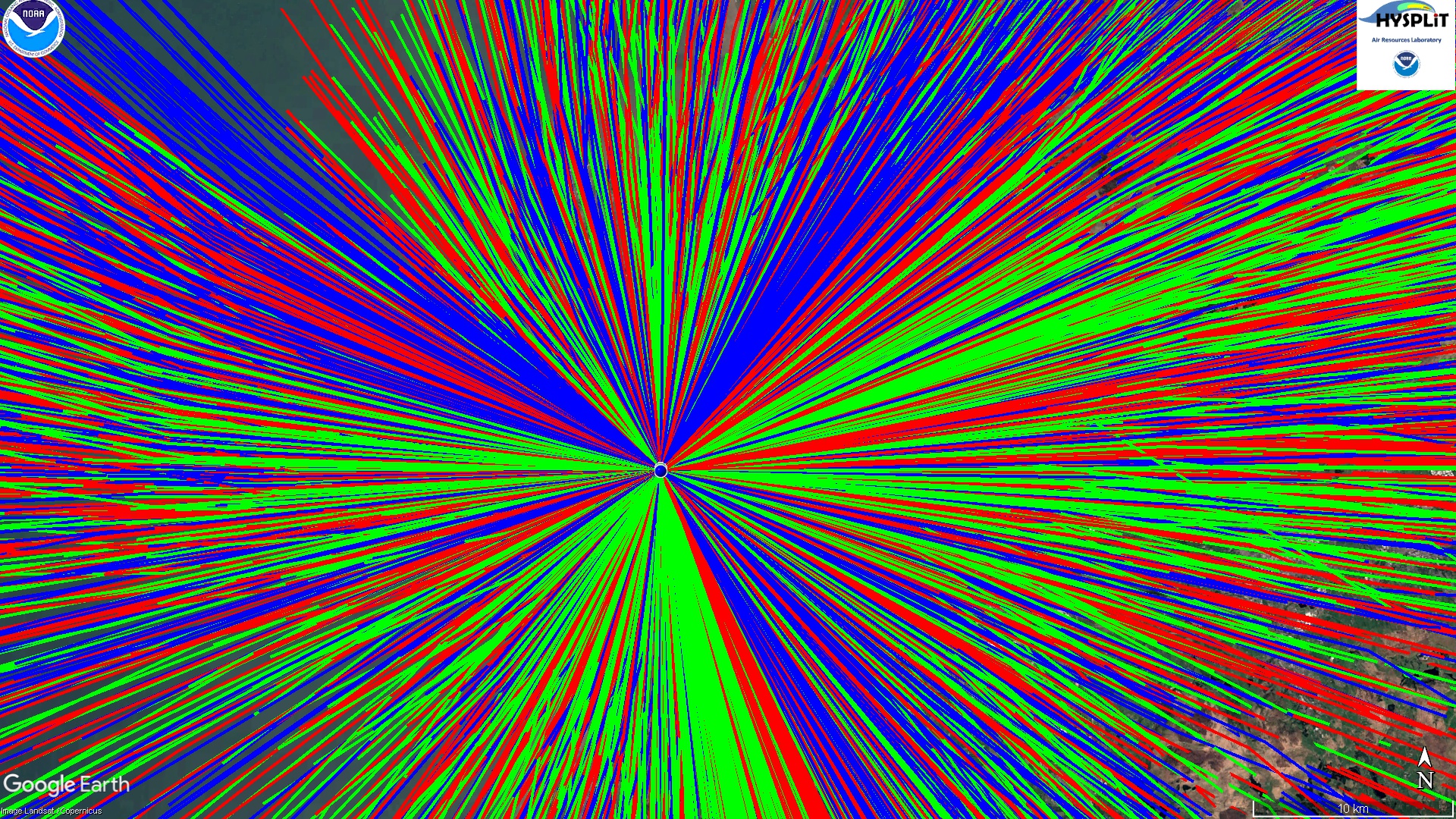
Figure: Daily and monthly air-parcel trajectory modelling, Preston New Road, October 2018 (NOAA HYSPLIT / Google Earth). The left image shows a forecast for where airborne particles are likely to disperse in one day. the image on the right shows a selection of days in one month, demonstrating that wind can come from any direction over the course of time.
These are not concentration or exposure maps; they illustrate that a fixed air monitor's position relative to a release shifts constantly with wind direction, which is why I am asking for continuous rather than fixed-point monitoring at Burniston. Shown for methodology only.Methodology illustration: shared-surface containment
The images below are drawn from our Preston New Road archive spanning 2017 to 2026. They are included to illustrate why I am asking Cloughton 2's permit to treat vehicles and mobile equipment as possible contamination carriers across the whole shared operational surface, not just the engineered containment beneath the well itself. Shown chronologically, the set also demonstrates that this is a recurring operational condition rather than a single incident. Preston New Road only- Cloughton 2 has not yet been built.